


The Human in the System — Why Human Regulation Matters
Working life consists of systems. Organisations, technological platforms, structures, and processes are all parts of systems designed to make work function. At the same time, it is easy to forget that these systems are always made up of people.
When we talk about efficiency, development, and competence, it is therefore not only about the structures around us. It is also about how people actually function within the systems they are part of.
This becomes especially clear in a time where the pace of society is increasing and working life is changing rapidly.
But when competition becomes the underlying structure of a system, it can also create challenges.
Humans Are Not Just Resources in a System
In many contexts, people in organisations are described as “resources.” The term can be useful in planning and structuring work, but it can also influence how we understand it.
In a previous article, I wrote about how systems in working life are changing. In this text, we take a closer look at the human within the system — and why regulation and relationships are becoming increasingly important.
Humans are not just functions within a system.
We are biological, relational, and self-regulating beings. Our bodies respond to pace, load, relationships, and expectations.
Our ability to learn, collaborate, and make good decisions is influenced by how we regulate stress, attention, and energy.
As working life becomes more complex, human regulation therefore becomes an essential part of competence.
Regulation as a Foundation for Collaboration and Learning
Regulation is largely about how people handle load and restore balance.
It can involve:
• how we manage stress and pace
• how we collaborate in relationships
• how we take breaks and process impressions
• how we create structure in everyday work
In organisations that function well, there is often an underlying understanding of these mechanisms — even if they are not always described in this language.
Leaders and teams that succeed over time tend to develop structures that allow people to work with focus, collaborate effectively, and recover when the load becomes high.
This is part of what we can call human sustainability in systems.
When Systems Do Not Account for the Human Being
When structures and pace evolve without taking human mechanisms seriously, challenges can arise.
Some experience increased stress or strain.
Others may fall outside systems they previously functioned well within.
We see this, for example, in:
• increasing experiences of stress in working life
• people feeling that they do not fit into existing structures
• a growing need for new forms of competence and development
This does not necessarily mean that systems are “wrong.” But it may indicate the need for a more holistic perspective on how humans and systems interact.
New Perspectives on Humans in Work
Across several fields, we now see a growing interest in how biological, psychological, and relational factors influence work and organisation.
This includes, among other things:
• understanding stress and regulation
• relational competence
• systems thinking
• reflection and learning in practice
These perspectives point toward a working life where competence is not only about knowledge and skills, but also about how people function within complex systems.
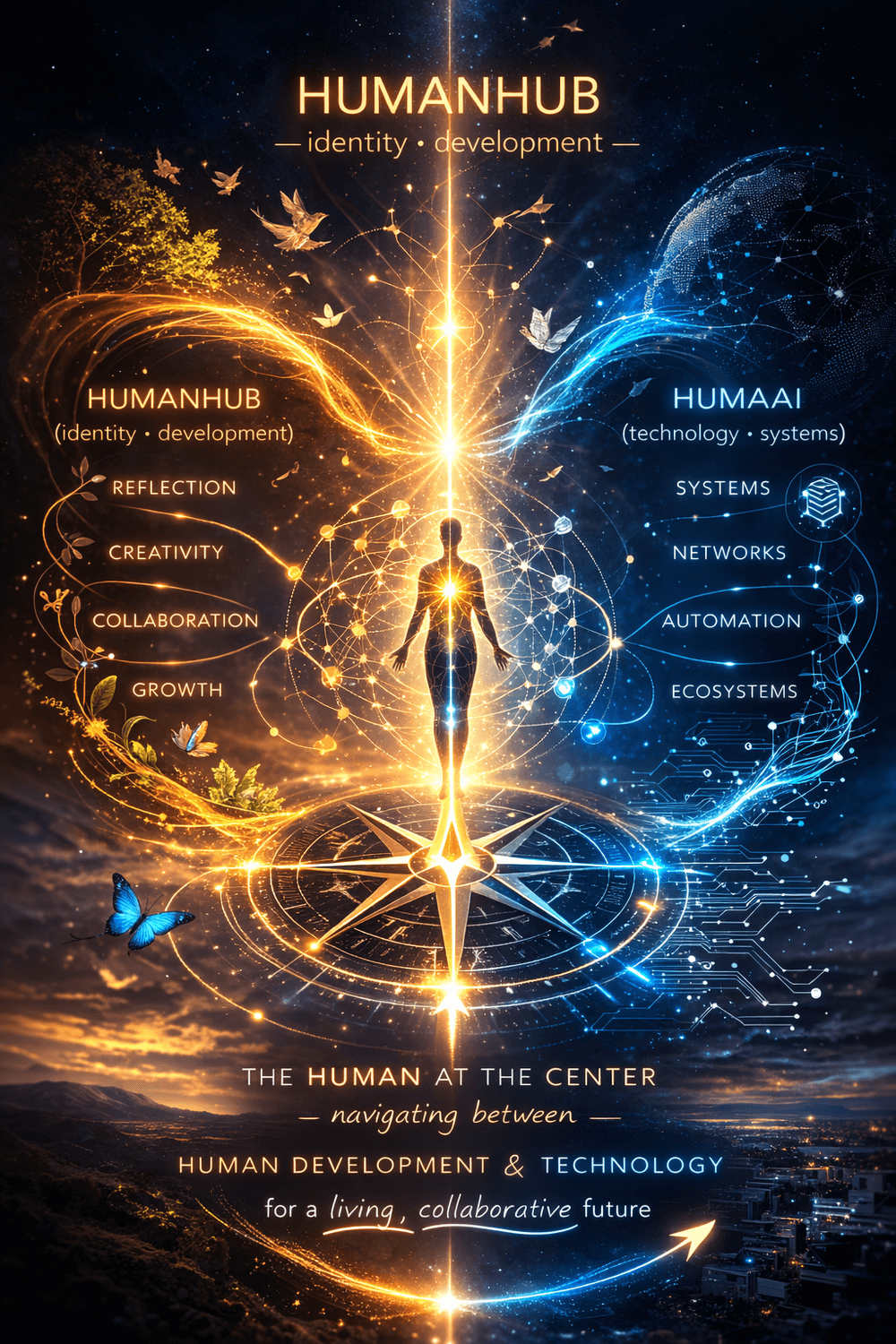
HumanHUB — Working at the Intersection of Human and System
At HumanHUB, we work precisely at this intersection.
Through initiatives such as ECO, we explore how learning platforms and collaborative environments can contribute to a deeper understanding of the relationship between human regulation, systems, and organisation.
The aim is not to simplify the complexity of working life, but to develop perspectives and structures that make it easier for people to navigate within it.
The Future of Work Requires Human
When we discuss the future of work, the conversation often centres on technology, competence, and new organisational forms.
These are important topics.
At the same time, it is easy to forget that all systems — no matter how advanced — are still made up of people.
Understanding how people regulate, collaborate, and develop within systems will therefore likely become increasingly important in the years to come.
Not only for individuals, but also for organisations that aim to create sustainable working environments over time.
At HumanHUB, we are among those exploring how an understanding of human regulation can be integrated into learning, collaboration, and organisation.
Warmly Rita 🌿💛
ECO-platform | HumanHUB | HumaAI | Blog | Courses| Books| Partnership| ECO-Shop