

Leadership as the regulation of rhythm
Perhaps the challenge in many organizations today is not a lack of control — but that the natural rhythm of the system has been broken.
Much of what we call leadership today is built around speed.
Plans. Results. Progress.
More pace. More efficiency. More control.
But the human body does not function that way.
It functions in rhythms.
Pulse and pause.
Inhale and exhale.
Day and night.
Activity and rest.
When these rhythms are disrupted over time, the nervous system reacts.
People become more reactive. Thoughts move faster. Conflicts arise more easily. Systems begin to creak.
This is not necessarily because people are weak.
Often it is because the rhythm has been lost.
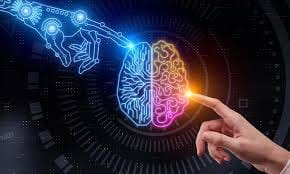
Perhaps one of the most important things a leader can do is not to push the tempo further, but to recognize the rhythm within a system.
When do people need momentum?
When do they need space?
When does a system need structure – and when does it need stillness?
This is another form of leadership.
Not leadership that controls people, but leadership that regulates the energy in a room.
Some might call this a more feminine form of leadership. Not because it belongs to women, but because it builds on qualities that have long been undervalued in many systems:
the ability to listen
to sense rhythms
to understand when something needs calm rather than more pressure.
When the rhythm is right, people move forward naturally.
When the rhythm is broken, we often try to solve the problem with more control.
But perhaps the opposite is true.
Perhaps the systems of the future do not primarily need stronger control.
Perhaps they need leaders who understand rhythm.
Because within both people and societies there is already an intelligence that knows how balance can return.
Sometimes it simply needs a space where it is allowed to work.
These reflections are also explored further in the introductory course The Body is Electric and in the anatomy course within the ECO learning journey.
Warmly Rita 🌿💛
ECO-platform | HumanHUB | HumaAI | Blog | Courses| Books| Partnership| ECO-Shop