


The Human
The Machine
and Living Systems
Technology is evolving rapidly around us. New systems, platforms, and ideas emerge almost daily.
But in the midst of this development, a more fundamental question arises:
What actually allows systems to live well alongside human beings?
This reflection explores the relationship between humans, machines, and the systems we build — and why the structures of the future may need to be understood more as living ecosystems than as purely technological solutions.
We live in a time where technology is evolving faster than ever before.
New systems, platforms, and ideas appear almost daily. Artificial intelligence analyzes information, blockchain opens new ways of organizing value and trust, and Web3 attempts to create more decentralized structures.
Yet within this rapid development, another fundamental question emerges:
What allows systems to thrive with people — and what causes them to collapse?
History shows that technology alone is never enough. Systems can be advanced, efficient, and well designed, but if they fail to create meaning, cooperation, and movement among the people who use them, they gradually lose their energy.
This reflection explores three perspectives on the relationship between humans, technology, and systems.
From the development of machines and artificial intelligence, to how systems grow or break down — and finally how the systems of the future may need to be built in order to truly live.
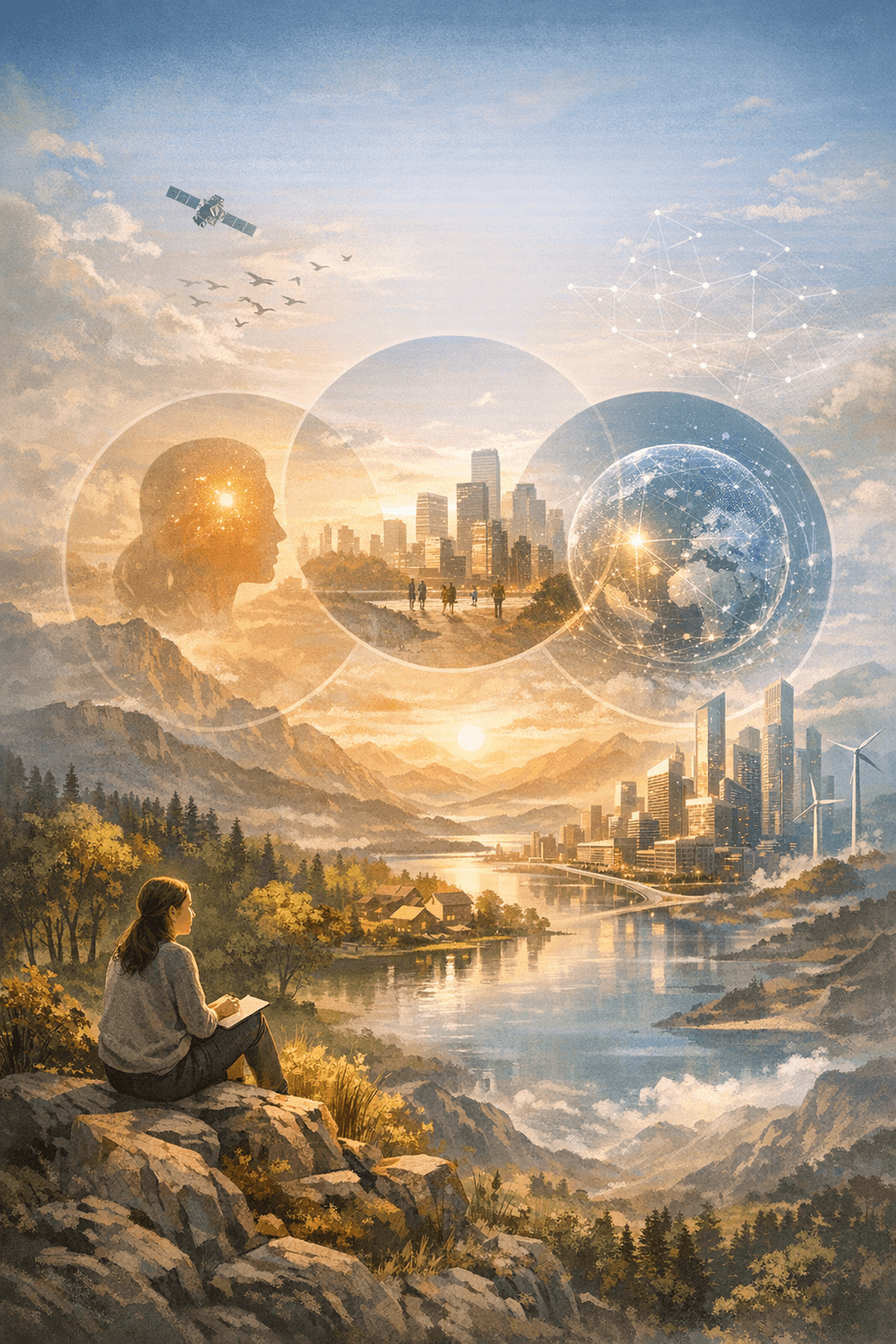
The Human and the Machine
Throughout history, humans have developed tools that expand our capabilities.
At first, they were simple instruments.
Later came machines that could perform physical work faster and more efficiently than we could.
The industrial revolution did not only change how we produced goods.
It also transformed how society was organized.
Factories emerged.
Systems became more structured.
Work took new forms.
The machine became part of everyday life.
But the machines we are developing today are different.
They do not only extend physical labor.
They are beginning to touch the cognitive domain as well.
Algorithms analyze information.
Systems learn from data.
Artificial intelligence can recognize patterns that humans previously had to identify themselves.
This creates both opportunities and new questions.
What happens when systems begin making more decisions?
How does this affect the work we do?
And how can technology be developed in ways that continue to support human judgment and experience?
When Systems Live — and When They Collapse
Throughout history, humans have organized themselves in systems.
Some are built for cooperation.
Others for control.
Over time, systems develop their own dynamics.
They influence how we work, how value is created, and how people relate to one another.
But not all systems live well with the people they are meant to support.
Some systems gradually become more focused on sustaining themselves than on serving the humans they were originally built for.
Rules increase.
Structures grow heavier.
Flexibility disappears.
When this happens, a quiet friction often emerges.
People sense that something is no longer working — even when the system still appears intact on paper.
At the same time, new technologies and new ways of organizing collaboration are emerging.
Blockchain and Web3 attempt to build more open systems where ownership and trust can be distributed across networks.
As a result, competition arises between old and new structures.
Not only in technology — but in how people choose to collaborate.
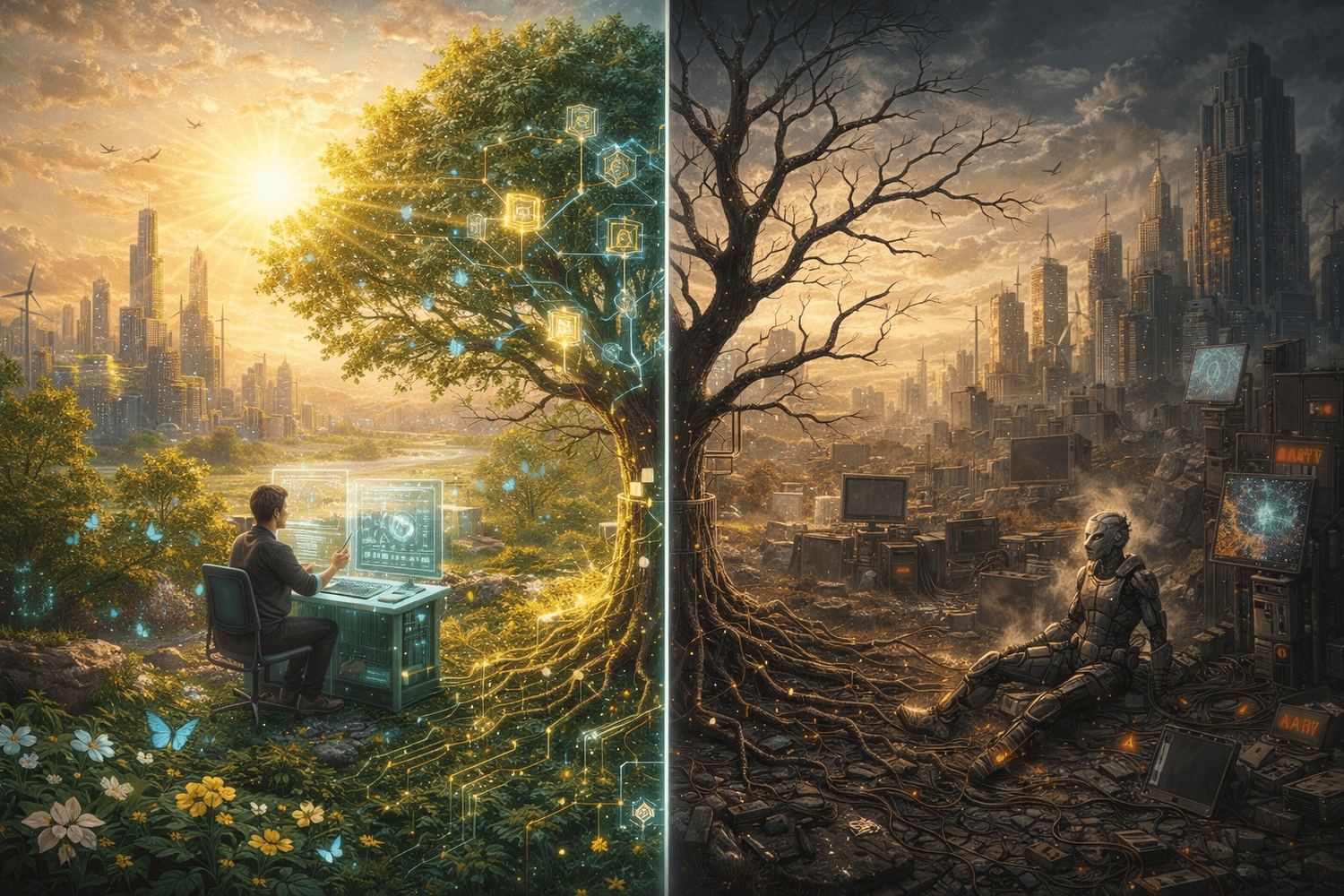
The Architecture of Collaboration
In nature, there is a simple principle.
Life does not arise merely because the structure is correct.
Life emerges because energy moves through the system.
The sun provides energy.
Plants grow.
Ecosystems develop.
Without this energy, movement stops.
Something similar happens within human systems.
A system can be technologically advanced and well designed.
But if people do not experience meaning or the opportunity to contribute, the energy gradually disappears.
And when that happens, people leave the system.
Not necessarily because they want to — but because human beings are naturally drawn toward places where life and development exist.

Today, many new projects are being built rapidly.
Smart technology makes it easier than ever to create new platforms.
Some will create real value.
Others will primarily live on attention, hype, and competition.
The difference often lies in the foundation.
What kind of energy does the system seek to attract?
Is it built around short-term gain — or around collaboration, development, and long-term value?
When people feel that they can contribute, learn, and grow together, systems begin to live.
Perhaps this is where the systems of the future must begin.
Not in technology alone —
but in the human being who uses it.
HumanHUB explores how humans, technology and collaboration can evolve together in a changing world.
Human development at the center. Always.
— Rita 🌿💛
Back to blog
ECO-platform | HumanHUB | HumaAI | Blog | Courses| Books| Partnership| ECO-Shop